Detroit · Southeast Michigan
the warmth you’ve been missing
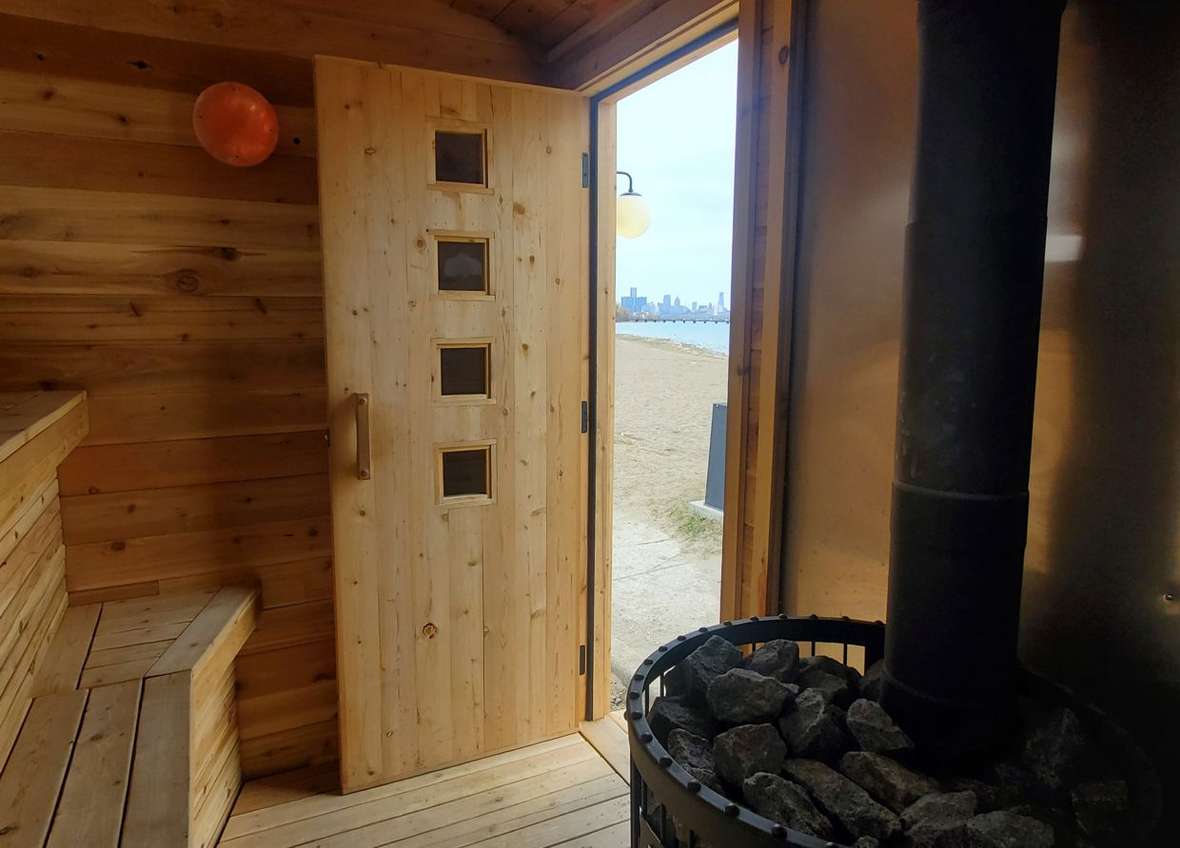
A hand-built cedar sauna on the sand at Belle Isle Beach, thirty feet from the Detroit River. Two tiers of benching, a stove banked with stones, room for ten. Fall through early spring we are out there about two weekends a month, and if the sessions keep filling we will be out there more.
It is one of the better ways we know to spend a cold afternoon outdoors, and one of the few that leaves you talking to people you arrived not knowing.
Every other weekend, October through January. Tap a weekend to see its sessions.
A session
Heat until you have had enough. Cool down in the Detroit River if you want it, or just outside in the air. Sit a while. Go back in. There is no correct number of rounds; most people here land on two or three. Bring a swimsuit and a towel, and here is the full list.
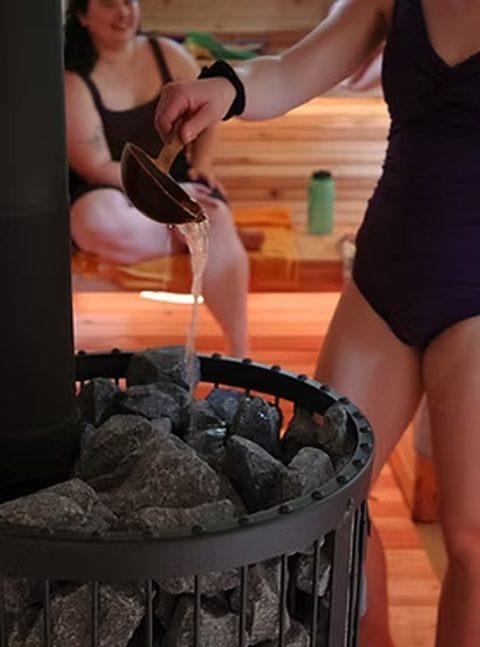
Cedar walls, a wood stove banked with stones, 180 to 205°F. Ladle water across them and the heat arrives as a wave you can feel move across the room. Finns call that löyly , roughly LEU-lü, and it means the wave itself, not the water and not the steam. Ten to twenty minutes is a round.
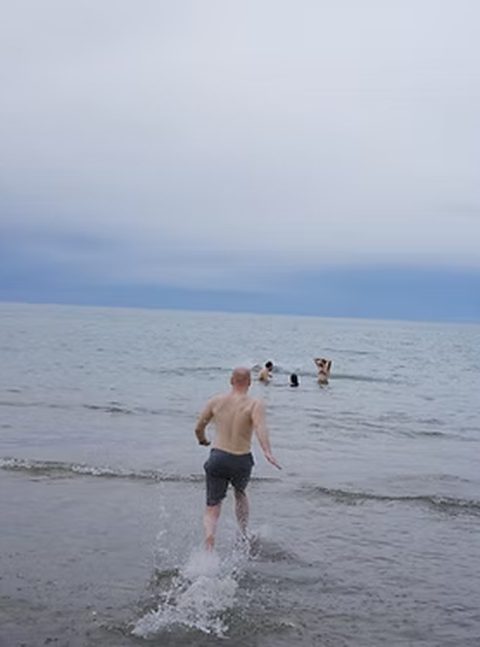
The Detroit River runs about 60°F in October and drops to the mid-30s by February, so this is a real cold plunge. Thirty seconds is genuinely enough to get the effect. Walk in, stand still, and let the first gasp pass. The whole skill is slowing your breathing down while the cold settles. Rather sit it out? A chair in the open air cools you just as well.
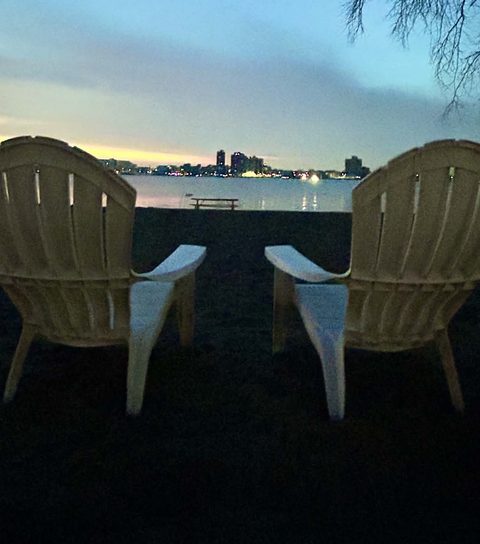
Sit as long as you like, then head back into the heat. The second round always lands better than the first. Your body has met the heat once and stops treating it as an emergency. There is a fifteen-minute sand timer on the wall rather than a clock, because it is a gentler thing to glance at and the decision should come from how you feel. Keep drinking as you go. A session pulls roughly a pint of water out of you.
↻ The median Finnish session is about fifteen minutes in the hot room. Finland keeps one sauna for every 1.8 people, so they have had a long time to work it out.
Why people keep coming back
Finns just call it the rotation. Researchers call it contrast therapy. We went and read the evidence for both halves. Here is the short version, with what holds up separated from what does not.

Find us
SOMi travels. Public beaches, private shoreline, backyards and lake houses across Southeast Michigan. Book a single seat at a residency, or take the whole sauna somewhere of your own.

Weekend sessions through the season, seven a day, ten seats each, with a cold plunge straight into the Detroit River.
See dates & book →We are looking for more places to set up around metro Detroit, somewhere with a view and a way down to the water. Know a good spot, or want to host us?
Get in touch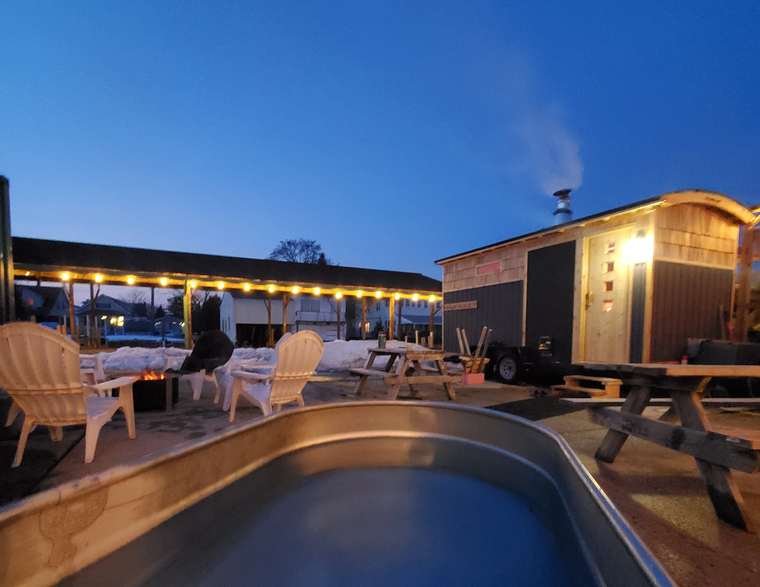
The sauna still travels. Backyards, lake houses, retreats, weddings and company events across Southeast Michigan.
Half day $425 · Full day $650 · Weekend $1,250
Rental detailsWhy we built it
What got me first was how it feels, and how it gets you outside in weather you would otherwise hide from. A Michigan February is not something most of us spend time in on purpose. This is a reason to.
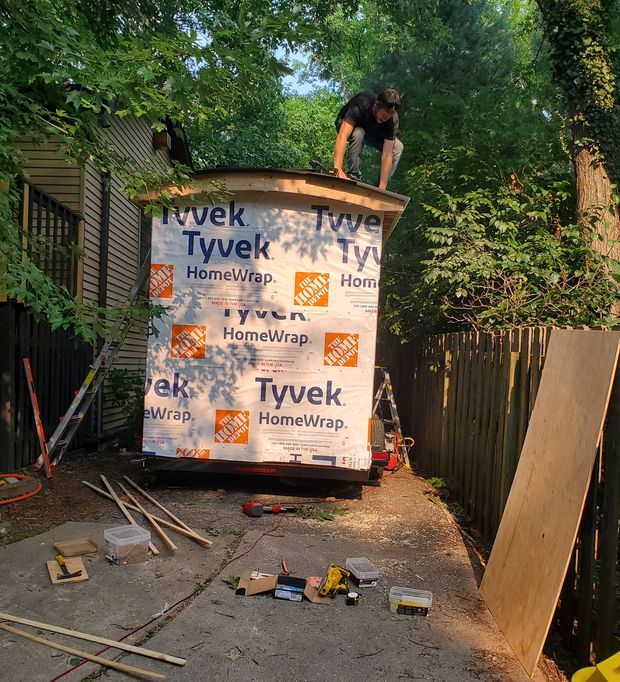
Something about being hot, then cold, then sitting down with people makes conversation go somewhere it usually does not. Closer to the second night of a camping trip than to meeting someone at a bar.
That happens between strangers as readily as friends, and I still find it slightly remarkable.
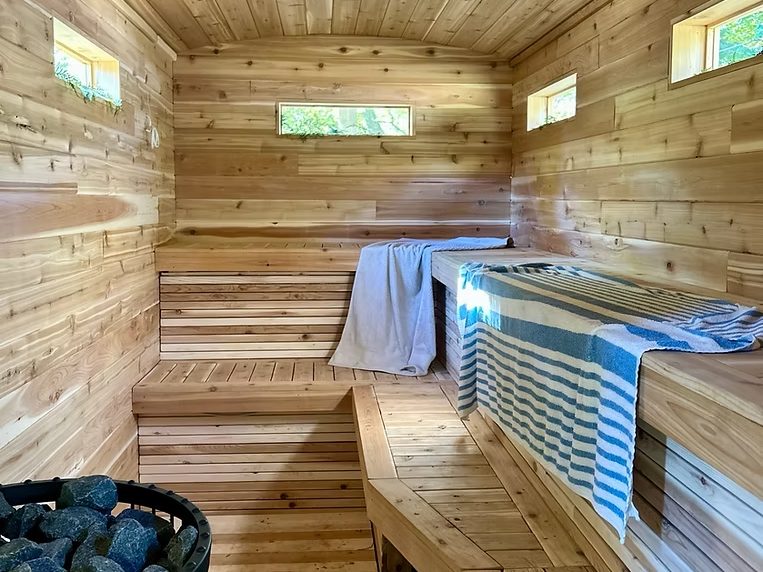
The saunas that made me want to build one all had something specific about them: a story, a setting, a community. So I tried to make one with its own.
A long time went on how people would sit and talk in here, on how Finnish saunas move heat around a room, and on stoves. This one feeds from outside, so nobody walks through your session with an armful of wood. I looked at a few hundred saunas before settling the lighting. I sat on a lot of benches working out what it would be like to lie down on one.
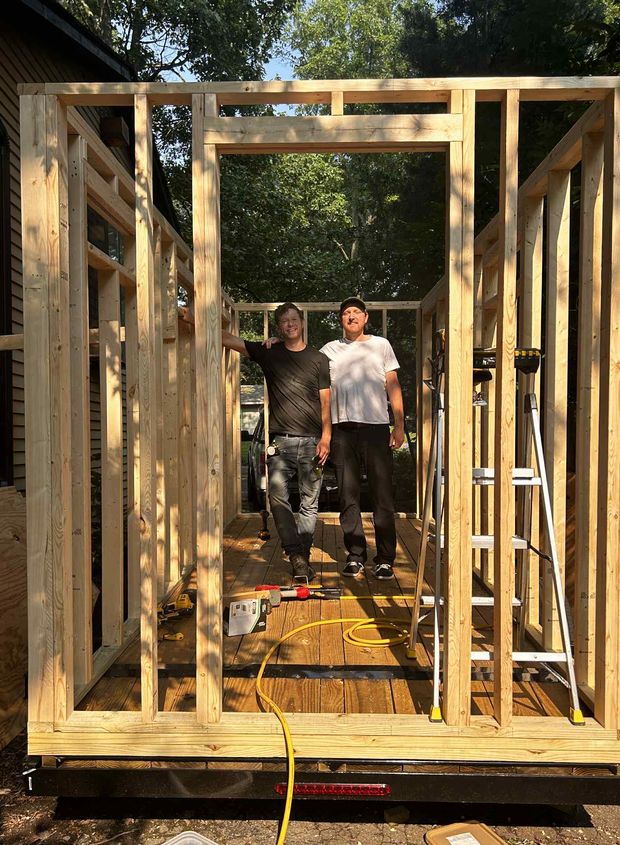
Gordy and I met when we were twelve and we have been building things together ever since. He spent an enormous number of mornings, days and late nights in my driveway on this one.
It is our first sauna and I think we got it right. We would happily build one for somebody else, so say something if that is of interest.
The other reason is duller and more personal. I had persistent knee trouble and a pinched sciatic nerve for years. The heat loosens me up and the cold numbs things enough that I can actually work through my range of motion, and both are in better shape now than they have been in a long time. That is one person’s experience rather than a medical claim, but it is the thing that turned this from an interest into a trailer in my driveway.
So that is what this is. A room we made carefully, parked somewhere beautiful, for anybody who wants to sit in it. Come and use it.
Sauna is a cheat code for meditation. The aim is a quiet mind, which I have never been good at. But in the heat the only available thought is this is hot, and in the river this is cold, and once you stop arguing with that, the quiet just arrives.
Some support: in a controlled study, people who took a short cold immersion afterwards reported themselves more alert, attentive and inspired, and less distressed, with brain imaging showing tighter coupling between attention and emotion networks. The cold →
You are choosing discomfort on purpose, with a way out at all times. It is a fight-or-flight response you are running voluntarily, and my experience is that practising it here makes the stress that arrives uninvited elsewhere easier to sit with.
Half supported: the adaptation to cold is real and quick, and about four to six goes blunts the shock response, and it lasts months. Whether that carries over to unrelated life stress has not been shown, so treat the second half as my opinion. The cold →
The conversations in here are better than they have any right to be. Strangers included. I did not expect that to be the most durable part of the whole thing, and it is.
Well supported: researchers studying public saunas describe them as democratic places, and found people end up alone, together, or alone together, and that all three register as company. Finns have a phrase for it. Origins →
The sauna itself
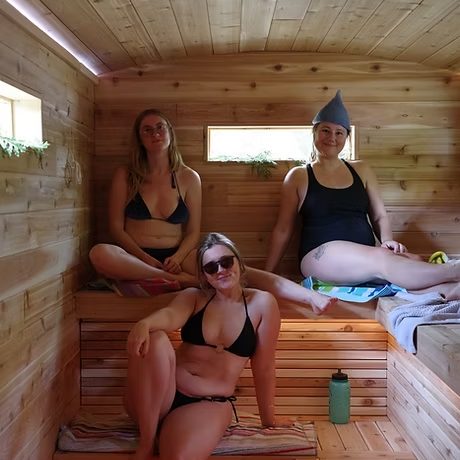
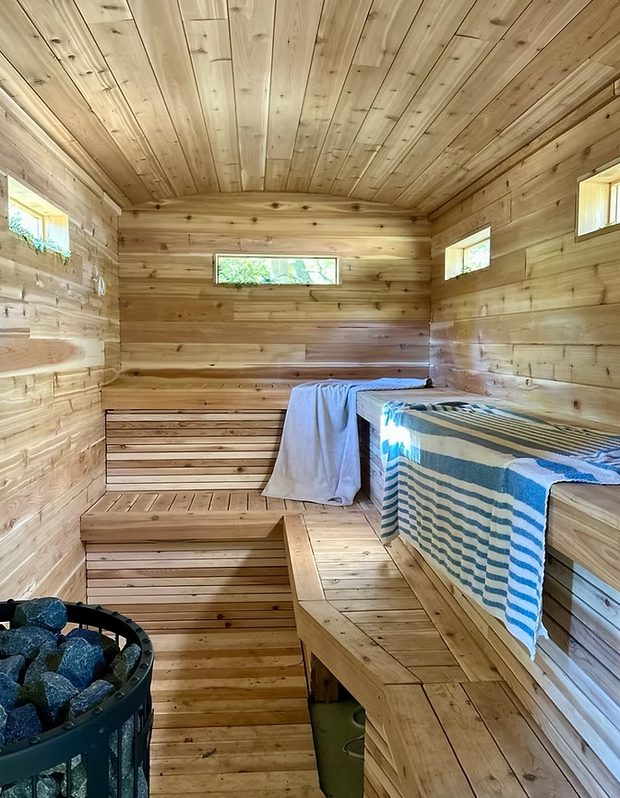
By the arithmetic most barrel saunas use, this room would be advertised as a sixteen. We call it ten, because ten is the number that can sit back, stretch out and not touch knees for 75 minutes.
The two tiers are not decoration. Finnish builders follow what is half-jokingly called the Law of Löyly, set down by the ethnographer Sakari Pälsi around 1960: your feet should sit at or above the top of the stones. Heat stratifies, so a bench that is too low gives you a scalded head and cold feet. The upper bench is where a sauna actually works, and it is the thing a barrel cannot give you.
And the cedar. Every surface in here is it. Walls, ceiling, both tiers of benching. At 200°F it smells absolutely incredible, which is most of why we chose it, and it will silver beautifully as it ages.
The archive
Things we have wondered about on the bench and then gone and looked up. Some history, some Michigan, a lot on what the heat and the cold actually do, and a few stories too good to leave out. Sources on all of it.
Read the archiveSauna reached Michigan with Kven miners landing at Hancock on Midsummer eve.
A Finnish president kept Khrushchev on the benches until five in the morning. Eighteen years later he deflected a Soviet military proposal by throwing water on the stones.
Germany runs a world championship in towel technique. There is a division that bans costumes and props.
Dates first
New weekends go up as they are confirmed, and the evening sessions fill first. We will email you when dates open. Nothing else.
 SOMi Sauna

